It takes a movement to reach a city

One of the decisive convictions of City to City Australia is the belief that it takes a movement to reach a city — and ultimately a society — with the gospel of Jesus Christ.

According to Tim Keller, “Reaching an entire city … takes more than having some effective churches in it, or even having a burst of revival energy and new converts”. Anything less merely leads to the reconfiguration of Christianity in a city — people drawn out of less vital churches into those that currently seem to be thriving.

In a movement, by contrast, the energy and momentum isn’t confined to one particularly vibrant stream of Christianity in the city. Our shared trust in the Lord Jesus Christ, in whom everything holds together and through whom God is putting this broken world back together, spills over the boundaries of tradition and tribe.

This is why it was so exciting to be part of the Gospel in the City event in Melbourne on November 2 this year.

It was a wet afternoon in Prahran. But it was the warmth of shared joy and sense of common task that was evident as we heard from planters and church leaders from a range of different networks and denominations:

GITC Melb 17 2 social sq.png

Jamie and Claire Bester (Southern Beaches Anglican Church, Hobart) spoke about their experience of the City to City assessment process, which has been instrumental in shaping their approach to launching Southern Beaches earlier this year.

Shebu John (Canterbury Gardens Community Church, Kilsyth South) gave us a report on the City to City International Intensive in New York City last year. His ministry leadership received a significant boost from the energy, input and connection with a network of dedicated planters and leaders from around the globe.

Stephen Tan (Regeneration Church, Monash) shared about the insight and support he’s been receiving from one of City to City Australia’s trained coaches. Stephen’s coach has walked alongside him through the pre-launch and launch phase of his plant, proving invaluable as a sounding board, source of wisdom, and ministry partner.

(L-R) Shebu John, Stephen Tan, Aaron Boyd, Pete Greenwood

(L-R) Shebu John, Stephen Tan, Aaron Boyd, Pete Greenwood

Aaron Boyd (Darebin Presbyterian Church, Thornbury) filled us in on the lasting impact his participation in the City to City Incubator has made on his life and ministry. Specifically, Aaron identified the way the Incubator inspired and equipped him with the practical tools to lead his church in contextual mission.

And Pete Greenwood (Inner West Anglican Church, Kensington) addressed the ’sanctified pain’ of receiving and repaying a City Renewal Fund loan, which both helps get new churches started and enables them to be investing in further church planting from their very inception.

Andrew Katay, CEO of City to City Australia, framed the afternoon in terms of the decisive convictions, vision and strategy of City to City Australia.

Aided by coffee and doughnuts, the robust and lively discussion that ensued — as well as the new connections forged across the lines of tradition and affiliation — gave us a taste of exactly the kind of movement City to City is praying and working to see in Australia’s cities.

Chris Swann
Director of Training

How many characters are there in your gospel? (Part 2)

Last post we opened up the question of how many characters there are in the gospel narrative - the great victory that God has won in Jesus Christ.

For many, the answer, at least functionally, is three - God, humanity and Jesus.

But we noticed that this produced 2 sets of problems. First, it limits the purpose and destiny of human beings simply to ‘relationship with God’, since there simply is nothing else for human beings to do. Of course, ‘relationship with God’ is wonderful, but as we’ll see, it's not everything. After all, Adam had God in perfect relationship, and yet it was not good for him to be alone.

Second, three characters means that sin is located and exhausted in humanity - and yet, we know that post-fall human beings remain in the image of God.

So how many characters are there in the gospel?

Biblically, the answer is five. So what are the other 2 characters?

The first is the world. And there are two things to say about the world as a character. On the one hand, the world means that there is another aspect of humanity's purpose and destiny - to steward the world. Importantly, this guards us against falling into any kind of gnosticism, or spiritualised vision of the gospel. As an expression of relationship with God, we were created to have dominion over creation; and we have been redeemed to be restored to that dignity, which will be fulfilled in the restored creation. On the other hand, it’s worth nothing that the world is entirely a victim in relation to sin, and hence will be unambiguously restored, freed from its bondage to decay, to share the freedom of the glory of the children of God.

Which leads to the other character - Evil (with a capital ‘E’). It’s interesting that in our secularised and ‘disenchanted’ Western culture, we find this so easy to forget. But for Jesus, one way to define his mission was to bind the strong man and plunder his goods - that is rob the Evil One of that which he had enslaved, including us!

Again, notice that the Evil One is entirely an agent of sin, and so the lake of fire is that destiny for the Evil One, without any question.

Which raises the question, where does humanity stand in relation to sin - victim or agent / perpetrator? And what difference does all this make?

We’ll come to these issues in the next post.

Andrew Katay

The architect, the activist and the academic - City Lab Melbourne

Have you heard the one about the architect, the activist and the academic?

At our last City Lab workshop in Melbourne, we had presentations from all three — in a library in Carlton.

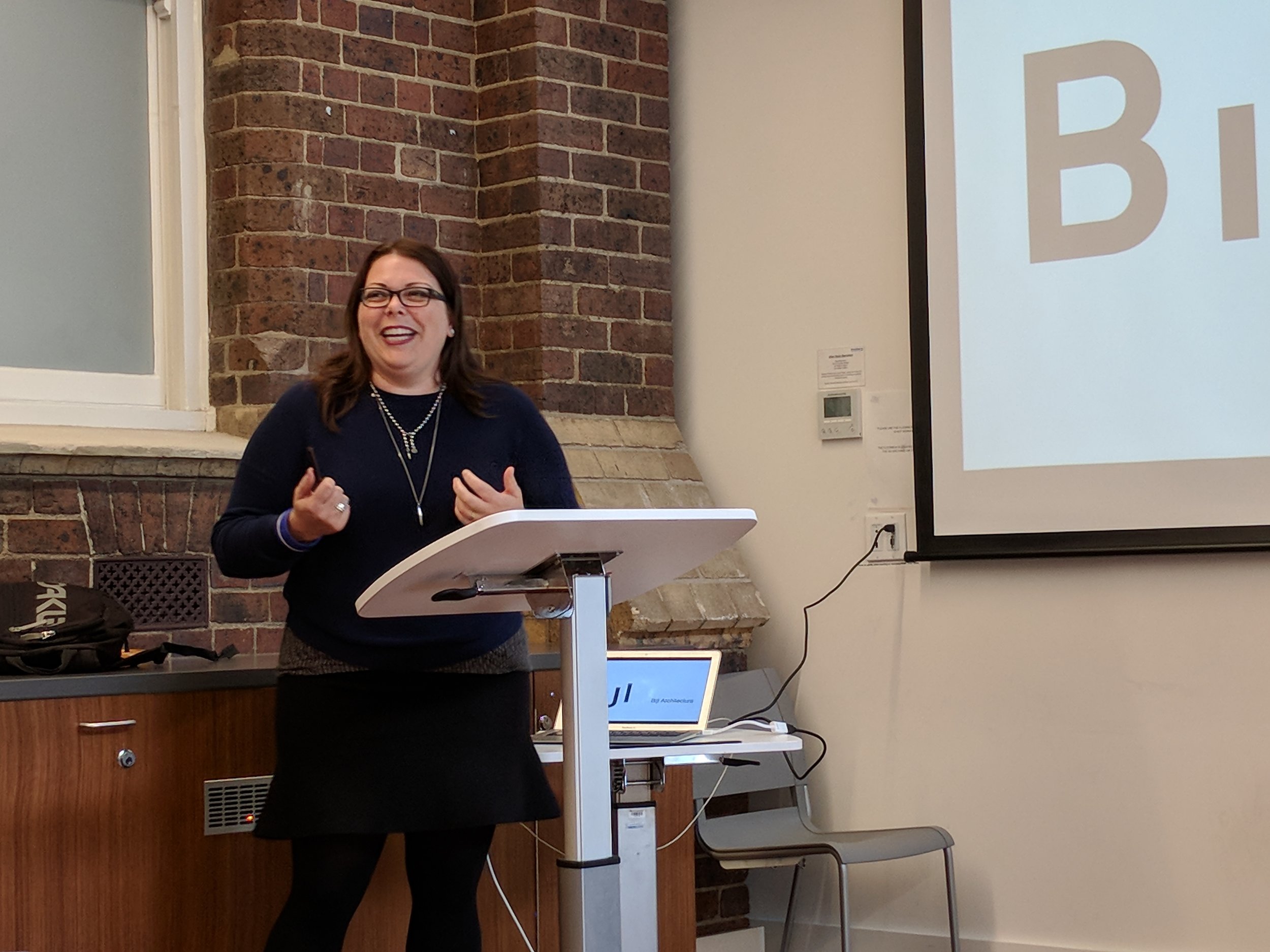
Sydney Architect Melonie Bayl-Smith (Founding Director of Bijl Architecture and Adjunct Professor at UTS) shared about the challenges and opportunities of integrating her trust in Jesus with her professional practice.

Melbourne-based activist Andrew Naylor (Australians Together) spoke about our need to be interrupted and listen to the voices of indigenous Australians.

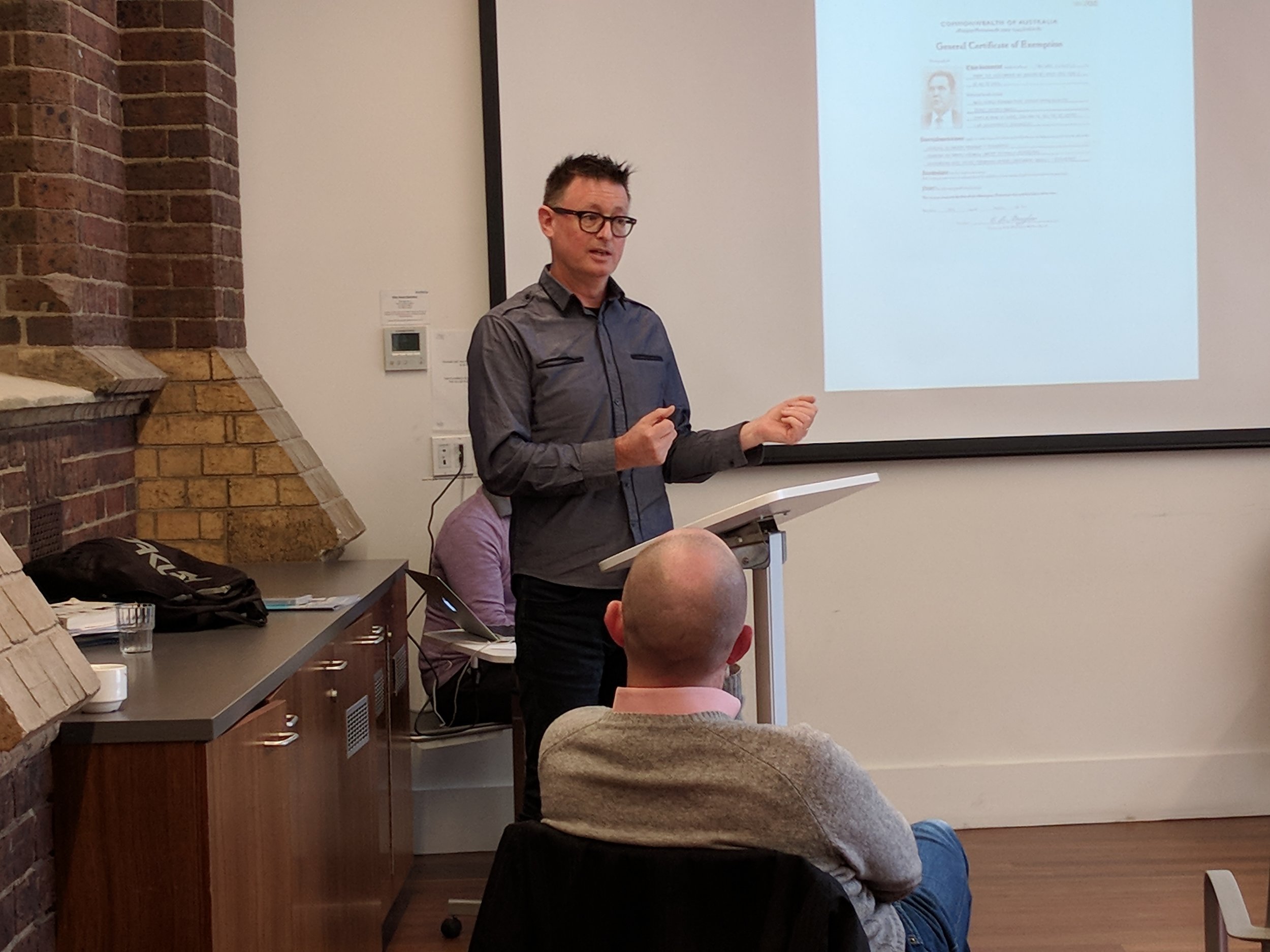
And Melbourne University academic Catherine de Fontenay (Associate Professor of Economics at Melbourne Business School, University of Melbourne) gave her expert perspective on injustice in Australia today, and gave us a glimpse of her personal response in choosing to be part of a church that pushes her out of her socio-economic comfort zone.

One of the decisive convictions of City to City Australia is that the God and Father of our Lord Jesus Christ is both creator and saviour — and that those two things are deeply connected. We’re convinced that this makes all the difference for our Christian lives and leadership.

So it was a privilege to hear from three such articulate and personally engaged Christians about life in the trenches of integrating faith, work, justice and mission.

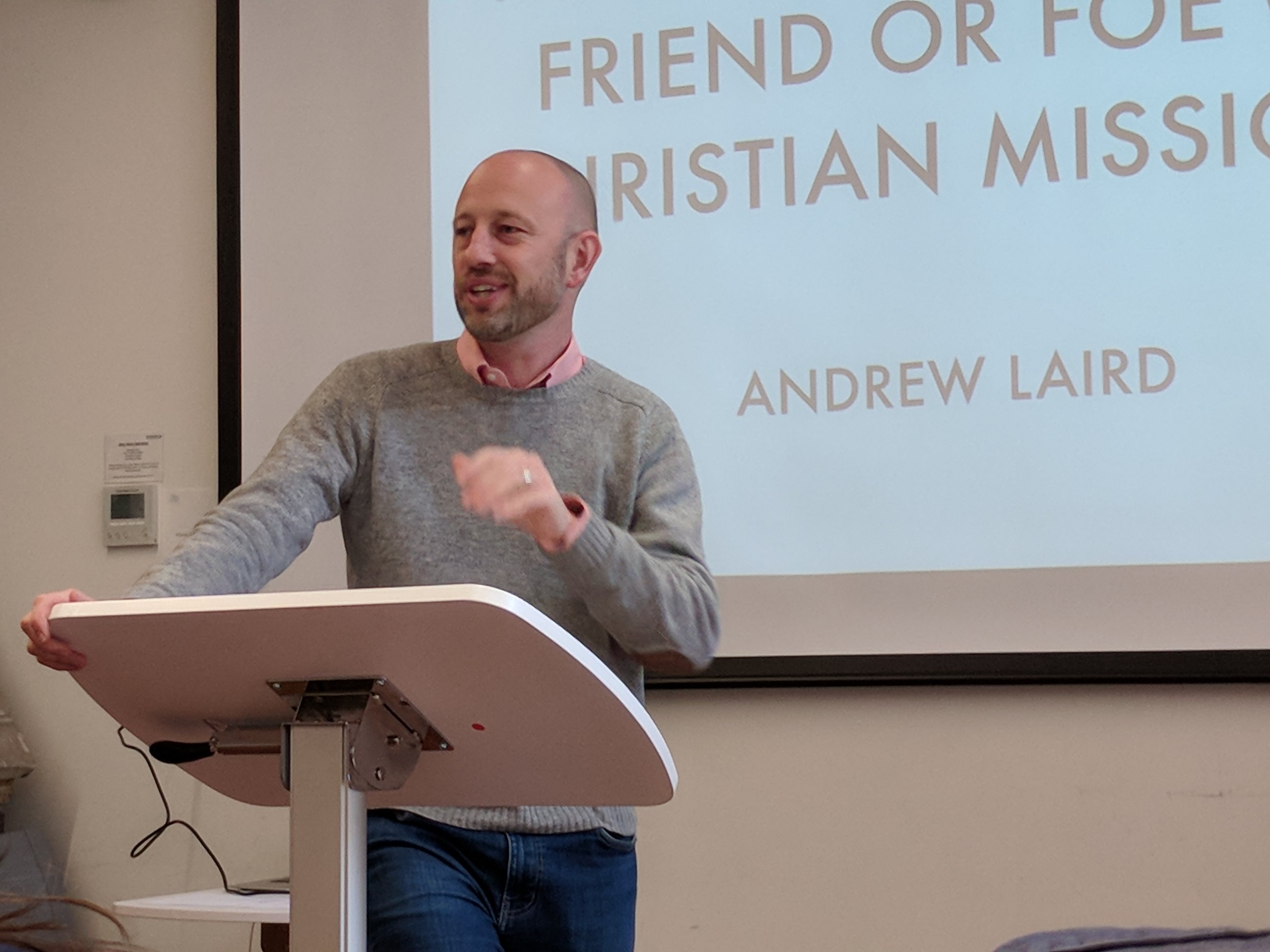
The whole event was framed by a presentation from Andrew Laird (City Bible Forum and Dean of the Marketplace Institute at Ridley College). Andrew took us on a whirlwind tour of the Bible’s teaching about the role integrated Christian lives play in God’s mission in the world.

All told, the City Lab was a rich and stimulating opportunity to reflect on the challenge and necessity of integration. My prayer is that it helped Christian leaders develop a theological vision for this urgent task — informed not only by the biblical pattern but also by the on-the-ground realities of work and the world.

Chris Swann
Director of Training

How many characters are there in your gospel? (Part 1)

One of the most interesting, important and distinctive features of Christianity is that it is what scholars call ‘an historical religion’. That means that it is about events that have actually happened, facts of history that can be investigated and understood, and which are to be acknowledged even if their significance is disputed - like crucifixion and resurrection. This is in contrast to a religion which is more like a philosophy, timeless ideas that don’t have any particular connection to actual events, but are designed to inspire people to behave differently.

One thing that follows from being historical is that Christianity can be framed as a narrative - a narrative not about what we do for God, but rather what God in his grace is doing. 

And if it’s a narrative, then there will be characters. And hence the title of this blog - how many characters are there in your gospel?

At first glance, it would seem obvious! But actually, it’s not quite as obvious as you might think, and it makes a huge difference to how you answer the question.

Most gospels I hear have three characters - God, humanity and Jesus. God is the creator, humanity rebels against that good and wise creator in a variety of ways, and Jesus is the Saviour who rescues us from our plight. Of course, it’s often much more sophisticated than that, but that doesn’t effect the basic structure.

Notice a couple of things about a story like that.

First, only having those three characters in the story directly effects the possibilities for expressing the purpose of humanity. All that humanity can do is be in a relationship with God. Now, don’t get me wrong, being in a relationship with God is wonderful! But the question is, is that the totality of what human beings were created to do? What’s more, because the ‘final state’ of a story is always a resolved or completed version of the initial state of the story, that will consequently determine what the purpose of salvation is in glory - ‘to be in a right relationship with God’. Again, that’s true and wonderful, but is it all?

Only having those three characters also carries a second consequence. Namely, that whatever is wrong or broken or evil, has to be located in one or more of those three characters. Obviously, it’s not going to be God or Jesus, which means that it must be humanity. And what that leads to is a very particular view of humanity after the fall, as totally responsible for all evil.

The question is, does the Bible support either of those conclusions? And if not, what other characters might the Biblical gospel have which would change the structural possibilities?

We’ll look at that in the next post.

Andrew Katay