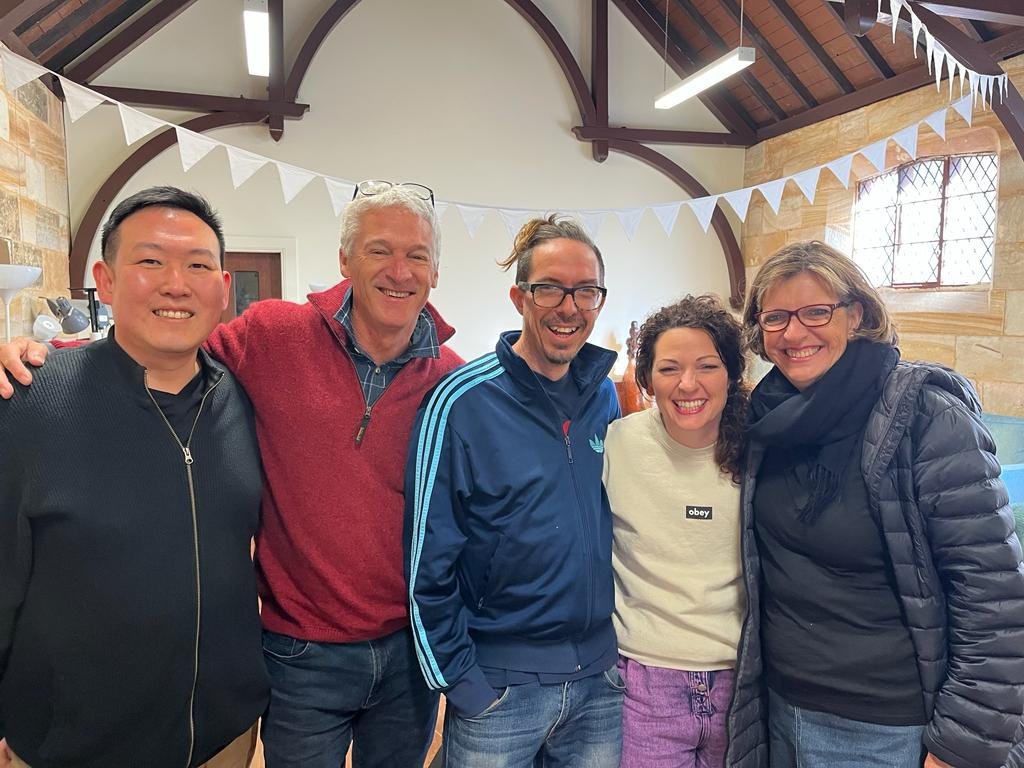
Mathetes Church Plant with Jonas Lee

When Jonas Lee met with Andrew Katay to discuss his plans to become involved in multicultural mission with university students on campus, he had no intention of planting a church; he had never even considered it.

Jonas was interested in multicultural missions with students. But one conversation was all it took for Jonas to become interested in pursuing church planting. Andrew described a method and a mode that appealed strongly to Jonas, where a team is gathered, and a non-English speaking church is planted alongside an existing majority-culture church. Coming from Korea, these two elements were new to Jonas, and were very attractive to him.

Jonas had become a believer in Korea and had attended Seminary there. He grew up in a church where a doctrine of prosperity was taught, where church members were expected to attend church events every day of the week, and where the senior pastor held an unquestioned elevated position. In Seminary, Jonas learnt that the prosperity gospel was not the life-giving gospel of Jesus, the gospel of the bible, and discerned that a life overseas on mission was for him. Jonas then spent several years on mission in Mexico, before he eventually came to settle in Sydney.

Jonas had visited Sydney twice before he and his wife, Hani, came to live there five years previously. Hani was looking to do a PhD, and they chose Sydney as the place for her to complete it. Jonas, being a missionary, was keen to become involved in campus ministry when Andrew Katay and he had that pivotal conversation. Jonas was particularly intrigued by the ideas of gathering a team to prepare to launch, by the concept of a “soft launch”, and by considering the importance of systems by which a church might operate. Reflecting on life and practice in church in Korea, Jonas said that there is no team, no gathering of support or donations, and no staged launch process when a new church is planted: a pastor just goes! Jonas was grateful for the opportunity to plant alongside Christ Church Inner West in Sydney, and to have the support of a team around him during the process.

Jonas planted Mathetes Church in February of 2021. The team had gathered and planned to begin regular meetings, but Covid restrictions caused them to meet online for a whole year before they could meet in person. Of the experience, Jonas says.

“Mathetes itself is a work of God. As soon as the church was planted, Sydney went into lockdown with many covid restrictions; so for nearly a year only the launch members gathered online. Even after the lockdown ended in early 2022, newcomers didn’t come for a while, and we had a difficult time. However, God worked at the time when we confessed that we couldn’t do it on our own. So it was totally out of our power, it’s only from God. In less than a year the number grew from 10 to 41, so I have no choice but to confess that it’s only God’s work, so I can always be humble and grateful.”

When Jonas considers the journey of Mathetes Church, he is grateful for the Church Planting Cohort offered by City to City. A big benefit, particularly during lockdowns, was that he felt less alone in planting. Also, Jonas had several ideas about planting, but belonging to a cohort of planters helped him consider the culture he was now living in in Sydney. While Mathetes is a Korean plant, Jonas is careful to consider his context when leading his congregation, and to avoid some of the pitfalls he observed in his previous church experience:

“We are a very slow church, and I take everyone’s opinion. In Korea, the Pastor is king, so if the senior pastor says something, you have to do it right today, not tomorrow.” Some Korean Christians don’t like this. They see it as unbiblical. “The Pastor is not king, we are all the same because the gospel is really important.”

Being committed to growing a “slow church”, Jonas has taken just over two years to add anything other than a Sunday service to the calendar of Mathetes. Consulting with his congregation, they have just added weekly Bible studies to their schedule. Jonas is delighted to be growing Mathetes alongside Christ Church Inner West, to be growing disciples of Jesus, and to be watching God at work as he walks with Him.

Jonas and Hani Lee


Written by Jane Duff
The Power of a Church Planting Network

City to City Australia hosted a three day Church Planting Intensive at The Garrison Church in Sydney at the end of August. At this Intensive, I witnessed first hand a superpower for church planters – the network of church planters itself.

Most of the planters who took part in the Intensive are involved in smaller cohorts of 5 or 6 planters who meet regularly online. But the Intensive brought several cohorts together in a larger group, along with other planters who are further along on the journey.

It was a joy to see relationships take root and begin to blossom among the 20 planters and planting couples from across Australia who gathered at The Garrison Church in the heart of Sydney for the Intensive. As they learned, laughed, cried, ate, planned and prayed together it became clear that this network is an incredibly powerful resource for them to draw on.

There were many special moments across the few days. Pedram Shirmast, who is pioneering a ministry reaching Farsi speakers in eastern Melbourne with his wife Leili, says this:

"The conference was not just an educational event but a transformative experience that empowered me to grow personally, spiritually, and professionally."

A key factor Pedram credits for this impact is the amount of time the planters spent in prayer over the few days. In the context of the relationships that were formed and strengthened, prayer was critical:

"Engaging with fellow attendees allowed me to establish meaningful connections. Sharing ideas and experiences with others enriched my perspective and helped me to have a better vision of the journey and the future. The prayers and support we offered one another in the small groups created a sense of unity and solidarity that was truly supportive and uplifting."

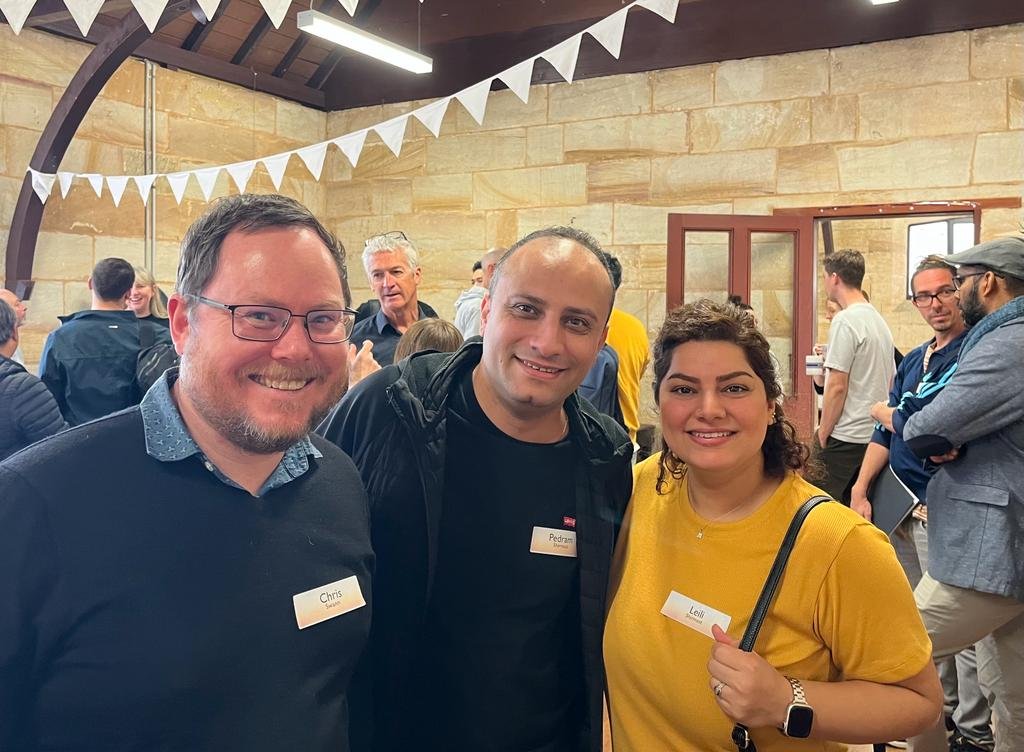
Chris Swann with Pedram and Leili Shirmast

Emma Poulsen who with her husband Chris is planting Neighbourhood Church in the community of Walkervale in Bundaberg also reflected on the power of the network of planters as it took shape at the Intensive:

"I really appreciated the unity displayed across different denominations, approaches and contexts and I was really encouraged by the emphasis on praying with and for each other – and the value placed in this was a huge encouragement!"

Jaehoon (Richard) Sung, planting in Sydney, and Emma and Chris Poulsen, planting in Bundaberg with Phil and Kath Henry

Of course, there was plenty of learning to do and wise input to wrestle with at the Intensive. But Emma appreciated the time deliberately carved out for personal reflection: "I loved the opportunity to reflect on not only ministry design and what God is doing in our plant, but also what He is doing in our hearts."

What's significant about what these planters experienced at the Intensive is that the relationships in the network are rarely their primary affiliation.

Most belong to one denomination or another – or perhaps are planting in connection with a missionally healthy sending church. And there are plenty of differences between them. All are planting in contexts that are quite different from each other. And most have differing convictions about secondary matters such as baptism, spiritual gifts, and the roles of men and women in ministry.

Yet these church planters find in one another people who get them. In the network, planters find that they are seen and understood – and are able to give the gift of seeing and understanding others – in ways that are profoundly life-giving.

Click here  to read more about our cohort program and express your interest in joining a cohort in 2024.


Written by Chris Swann
Director of Church Planting and Coaching

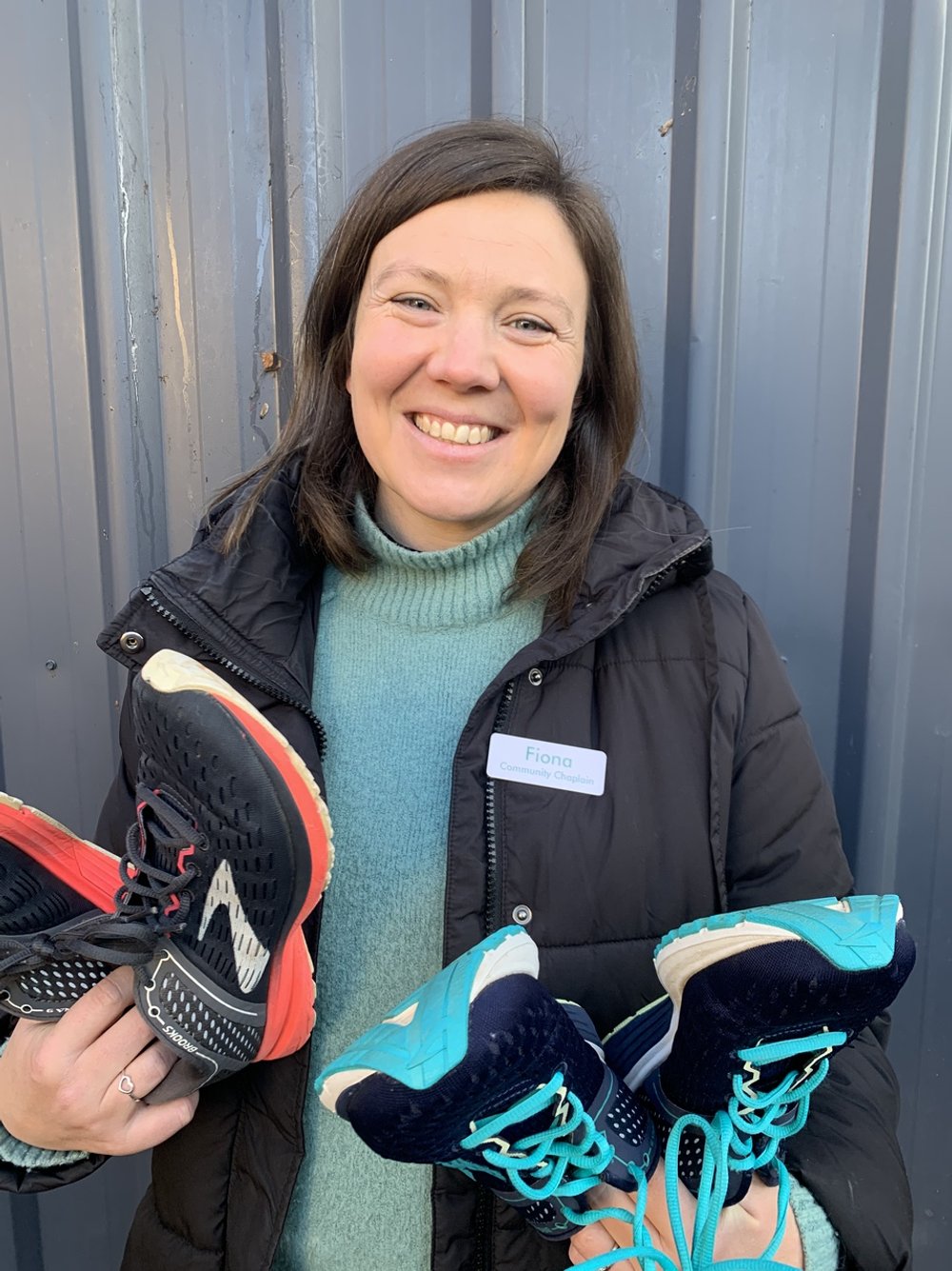
MinisTree: Building a Community for Outsiders in Bendigo with Fiona Preston

MinisTree in the Central Victorian town of Bendigo is a dynamic and vital ministry which serves many local people living on the margins in locations across the city. Beginning just eighteen months ago, Fiona Preston, the church planter and community chaplain, has found a purpose and a rhythm that is sustainable, and is life giving for those to whom she ministers. 

Fiona has a background in campus ministry in Melbourne and most recently in Bendigo at La Trobe University, a town of 120,000 an hour and a half north of Melbourne. 

After conversations both with her local pastor and her bishop she considered, and then pursued, ordained ministry within the Anglican church, and by the end of 2019 she was an ordained Deacon. At that point Fiona began working as a Chaplain at Tarrengower Women’s Prison, where she still works today. After some time at Tarrengower, Fiona added Hospital Chaplaincy to her work schedule. Fiona found herself working with many men who were experiencing desperate addiction and isolation. These two experiences began in her a new and deeper insight into the grace of the gospel, and has inspired her work with MinisTree. 

When asked about the work of MinisTree, Fiona reflects:

“MinisTree Bendigo, that was the dream. It was the idea that we wanted to go outside the walls of the church and do ministry on the streets, the ‘tree’ part representing growth and life, born out of the view that everybody is made equal and in the image of God.” 

Fiona is passionate about providing dignity, respect, love, and grace to the people who find themselves in places of great need; specifically, people who are “rough sleepers”. Rough sleepers is a term that encompasses more than what is connoted by the term homelessness. A person who is a rough sleeper might not have a home, might be couch surfing, might have social housing but spends the bulk of their time with other rough sleepers, or might be a squatter living in a vacant property. A rough sleeper spends the majority of his or her time on the streets. Many have been incarcerated, have experienced complex trauma, and have complex mental health issues. Some are addicts. It is a close community, with the bonds within it frequently being the closest those members have. The majority of rough sleepers are unlikely ever to qualify for social housing because their mental health precludes the functional capacity required to perform the daily tasks necessary for managing and operating a property. They do not have support networks large or functional enough to enable them to begin to develop those kinds of skills and capacities. The leap is just too great, and the chasm too vast. And since these people are unlikely to come to a traditional church for any reason, Fiona has gone to them. 


MINISTREE ON THE STREETS

FIONA PRESTON

Over four days per week, Fiona will spend time in the streets of Bendigo, visit the women’s prison, carry out speaking engagements, and spend time in the Neighbourhood House in the suburb of Long Gully. At the Neighbourhood House Fiona will lead a pastoral care group for women (which draws on Fiona’s expertise in Spiritual Direction), and also provide some one on one support. It is the balance between all these aspects of her role as a Community Chaplain that enables Fiona to stay energised for her work, and not become exhausted by it. 

Since beginning in a Church Planting Cohort with City to City, Fiona has begun to consider that the work she does on the streets can be considered church, although she would hesitate to call it that just yet. Her work encompasses many elements of church, just in a highly deconstructed form. There is no Sunday service, so there is not necessarily a “gathered” element which is usually associated with church, but there is very much a “scattered” embodiment of many facets of church life. Fiona will pray for people, read the Bible with them, offer pastoral care, and provide practical support in the form of small food items and clothing, and hopes soon to have a portable communion set. For many who have been in prison, chapel was a place of calm and nurture, and communion was a big part of that. Because of that strong connection, and because it is part of the life of believers, Fiona would like to be able to continue to provide communion for those for whom it is significant.  

Being part of a Church Planting Cohort with City to City has helped Fiona to think more broadly about the work she is doing. She admits that she can fall into thinking “I know what I’m doing, I’ll put my pastoral hat on”, but now she thinks about supports: “Who might I ask to pray? Do I need more volunteers? Do I need to consult with people with different giftings? And if this grows, in God’s grace, who do I need to wrap around (what is already here)? And if it grows and has more staff, where might I seek financial support for that?” The cohort has also been a great encouragement to Fiona in that although neither her work, nor the work of other members of her cohort, might fit neatly into the box of a traditional church plant, the principles taught are still applicable and useful to her work. Their facilitator affirms and accommodates their non-traditional models with skill and insight, and is able to ask questions that aid understanding and development of all their work. 
In all her work, one of Fiona’s greatest joys has been praying with those to whom she ministers, and having them not just join her in prayer, but to express genuine delight in their belonging to God, and His love for them. She expresses this, saying: “You wouldn’t replace that for the world, would you, those moments of your life? Because people are really in desperate need of God. I just love them. I love them.” 


Written by Jane Duff

Revitalise Nelson: Hearing What the Spirit Says in the Diocese of Nelson

A process of discernment began in the Anglican Diocese of Nelson at their annual Synod in September last year. 

It was not necessarily a comfortable process, nor one which yielded solely comfortable results. Presented with statistics and graphs which illustrated the diocese-wide decline of its churches was deeply sobering for all present. It was recognised that there was and is rampant and rapid change in the western world, and that it was a critical moment for paying attention to the Spirit, the prevailing culture, and potentially making some big changes. But how that change might occur, and what it might require, was unknown. 

In the Anglican Prayer Book in New Zealand there are two statements to be said after scripture is read. The reader will say: “Hear what the Spirit is saying to the church”, and the congregation will respond: “Thanks be to God”. One thing to whom those present at Synod could attest was a sense that God was calling the diocese to pause, listen, and discern; to “Hear what the Spirit is saying” at that precise point in time. As the season of discernment proceeded, it was decided that the entire Diocese of Nelson would engage City to City Australia to implement a revitalisation consultation program: Revitalise Nelson. All twenty-three parishes in the Diocese would individually undergo the Revitalise program. This was launched recently at Nelson’s Leadership Camp in July, the theme of which was ‘Hearts Transformed by Jesus’.


REVITALISE NELSON

It is no small thing to have an entire diocese undertake a process of change at a foundational level simultaneously in every parish. Given this herculean proposition, attendees arrived at the Leadership Camp with many questions. Once it had been articulated and understood that there was not going to be a single uniform and rigid program rolled out over the twenty-three parishes, but a highly individualised and consultative process, uniquely contextualised for each parish, with research and analysis of all facets of the life of each church, and a clear plan devised which would be implemented in concert with their City to City Lead Consultant, a sense of hopeful anticipation began to grow. 

Andrew Katay, CEO. of City to City Australia, and Jamie Bester, Lead RA Consultant for Tasmania and for Revitalise Nelson, gave several examples of real churches, very similar to those in Nelson, where deep and lasting positive change had occurred through the revitalisation process. 

Many attendees of the Leadership Camp, which comprised clergy, leadership, and lay people, had arrived expecting answers of a concrete nature to the many questions they had about what was going to happen in the revitalisation process.

What they received, however, was the discovery that within the essence of revitalisation at City to City:

“There is a philosophy, or even a theology at work with this idea that we haven’t encountered before: and it makes sense.”

  – Simon Martin, Bishop’s Chaplain, Nelson

That philosophy or theology was found in Jamie’s message: listen to what Jesus is saying about abiding in him and being connected to him, and the life and the fruit that comes from him that is produced in us. Similarly, one of Andrew’s key points was that transformation in our churches is not a product or a result of our work, but is borne out through a work of God in our lives. And so, according to Simon:

“The shift in thinking went from ‘Yes, we want change, but how?’ to ‘Through us, in us first, and through us to others’. And this is the way we’re wired. So there’s a sense of anthropology which gave people a wake-up call to the humanity of change. It was refreshing in the way that it wasn’t a system, or mechanics, or a program, it was a realisation that this is the human condition, this is how God made us, this is how God works. It’s how He effects change.”

This invitation to rethink how change happens in our church communities from a gospel perspective with Jesus at the centre was not quite the concrete “how-to” that many had anticipated, but it was life-giving revelation that began to bear a deep hope and excitement.

GROWING EXCITEMENT IN THE DIOCESE

The result was that there began a lively buzz in the breaks between sessions and at meal times. People were lining up to enquire further of Andrew and Jamie about the ideas and principles they had been sharing. Numerous requests were made for copies of all the slides used in the presentations, recordings of the talks, and which books might be useful to read for further insight into gospel renewal and transformation. Many ‘a-ha moments’ were felt and shared across the camp. Attendees grew in eagerness to begin, and to know what was next. Excitement for the future was palpable and tangible.

Conversations with the many young adults present showed that they had collectively been struck by the concept that change begins in the heart and works outwards. This contrasted strongly for them with what they often understood from many sermons: that change is a result of gaining more knowledge, which can result in a moralistic invitation to “try harder, or have more faith, or love God more”. Heart transformation from gospel renewal was received as a tonic by many, coupled with statements marvelling: “Of course! Yes! But how is it that we’ve missed that?”  

The camp ended with the majority of attendees feeling optimistic and genuinely hopeful about the future. The teaching sessions from Andrew and Jamie had been revelatory and life giving, and had deeply challenged people as they considered the import and implications of their theme “Hearts Transformed by Jesus”. Change for the Diocese of Nelson is certainly in the air, and the desire to see it transpire has been galvanised through this recent camp. Please pray for this diocese as the process of Revitalise Nelson begins!


Written by Jane Duff